From file clerk to coach: Traci Adedeji on defining success on your own terms
Traci Adedeji started in insurance in 1984 as a file clerk. In InsureStory’s first interview, she talks confidence, sponsorship and hearing “no” as “not yet.”
Traci Adedeji, CPCU, ARM, AIDA. Founder, Positive Paradigm Group
InsureStory
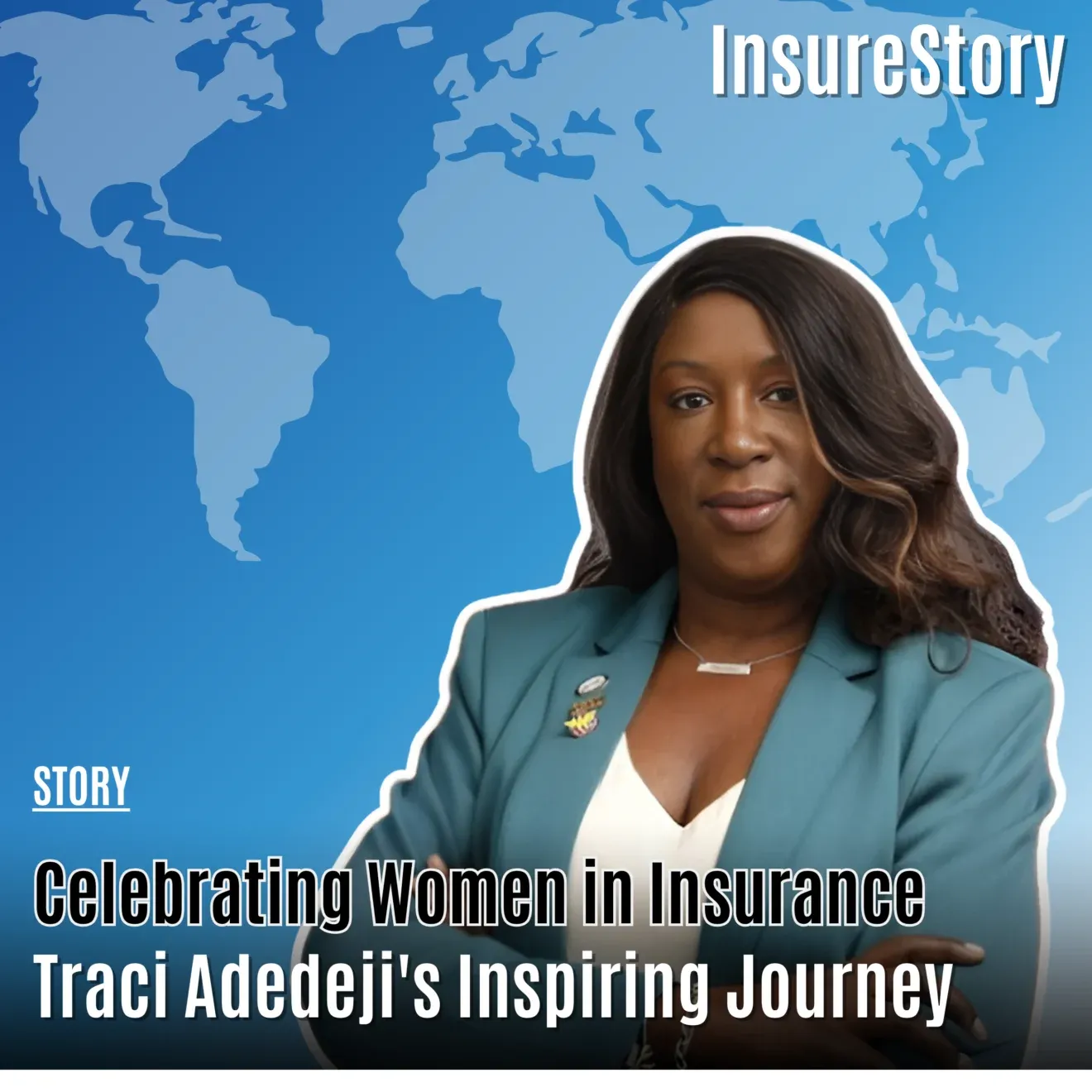
Traci Adedeji’s first job in insurance was in 1984. She was a young single mom who had left college to support her family, and she took a job as a file clerk at a family-owned agency in Union, New Jersey. A few months later she was a customer service representative. In 1990 she joined The Atlantic Mutual Companies as an assistant underwriter. “That’s when I truly fell in love with the industry,” she told InsureStory in our first-ever interview.
Her biggest early obstacle, she says, wasn’t the work. It was confidence. “I was chasing a version of success that had been defined by someone else, not by my own vision.” Learning to define success on her own terms became the turning point of her career.
“Reimagine ‘no’ as ‘not yet.’ If you don’t succeed the first time, view it as a learning opportunity.”
The moment that changed her trajectory came during a CPCU course at Atlantic Mutual, when an executive noticed her and suggested she be considered for an underwriter role she hadn’t imagined she could get. She calls it true sponsorship, and it taught her not to set artificial limits on what she could achieve.
Her credentials, CPCU, ARM and AIDA, stood in for a traditional degree, and she now encourages the leaders she coaches to consider non-traditional paths too. As a CliftonStrengths coach and founder of Positive Paradigm Group, she helps people build on what they’re best at. Her own superpower, she says, is connecting authentically with people. She describes herself as “pathologically positive.”
On leadership today, she points to five generations working side by side, technology reshaping roles and remote work changing collaboration. Effective leaders need agility, a clearly articulated culture, data-driven decisions and cultural competency. Technology, she insists, “will not replace humans—it will only enhance their ability to lead effectively.”
Next, she is building three pillars: insurance education, leadership coaching and professional speaking. Longer term, she wants to create a development programme for people who are often overlooked, helping them become leaders in risk management and insurance.
Her advice to her younger self is the thread running through it all: define success on your own terms, stay true to your “why,” and don’t wait for permission to lead.